Image Alchemy: Mastering Gemini's Visual Magic with RCTFC
Ever wished you could conjure stunning images out of thin air, just with your words? Imagine turning your wildest creative visions into captivating visuals with the snap of a finger (or, you know, a well-crafted prompt!). Get ready to unlock the secret sauce to generating incredibly detailed, diverse images with Gemini, because today, we're not just creating pictures – we're performing image alchemy.
Overview
Generating high-quality images with Gemini requires more than casual requests—it demands a structured, deliberate approach to prompting. This guide introduces RCTFC, a five-component framework (Role, Context, Task, Format, and Constraints) that transforms vague creative impulses into precise, actionable instructions for AI image generation. By mastering this framework and learning to apply it across multiple visual styles—from photorealistic nature photography to whimsical 3D animation—you'll unlock Gemini's full creative potential and consistently produce images that match your vision rather than disappointing approximations.
What You'll Learn
- Understand the RCTFC framework and why each component strengthens image generation prompts
- Apply RCTFC structure to generate clear, detailed image requests for Gemini
- Craft photorealistic images by thinking like a photographer and emphasizing light, texture, and camera terminology
- Create hyperrealistic images that magnify and exaggerate detail beyond ordinary perception
- Generate anime-style images by specifying substyles, character archetypes, and dynamic action elements
- Produce Disney Pixar 3D-style images by incorporating expressive characters, soft lighting, and narrative depth
- Experiment with layered descriptive details to refine image outputs across multiple visual styles
The RCTFC Blueprint: Your Prompting Superpower
The RCTFC framework is a structured approach to image prompting that translates the fuzzy, beautiful ideas in your mind into crisp, actionable instructions for Gemini. Rather than a rigid rulebook, think of it as a GPS guiding the AI toward your intended visual destination. RCTFC stands for Role, Context, Task, Format, and Constraints—five components that work together to eliminate ambiguity and ensure every pixel aligns with your intent. Without a structured approach, you might receive a pleasant image that bears only a passing resemblance to what you envisioned. For example, asking simply for "a dog" could yield any breed in any setting. But specifying "a golden retriever puppy, mid-jump, chasing a frisbee at sunset, with golden hour lighting" directs Gemini toward a specific, vivid image. This is the power of RCTFC: it transforms vague creative impulses into precise directions. Each component serves a specific purpose. The Role establishes the AI's perspective and expertise level. Context provides the situational background and purpose for the image. Task contains the specific, detailed subject matter and action you want depicted. Format specifies the artistic medium, style, or visual approach. Finally, Constraints set boundaries and fine-tune details, ensuring consistency with your vision. Together, these five elements function as a complete creative brief—the kind a professional director would give to a cinematographer or a client would provide to a designer.
- RCTFC provides essential clarity to AI by breaking requests into five structured components
- Specific details in the Task component are paramount for generating images that match your vision
- Constraints fine-tune artistic direction and prevent unintended variations
- RCTFC functions as a complete creative brief that eliminates ambiguity
Lab: Lab Exercise
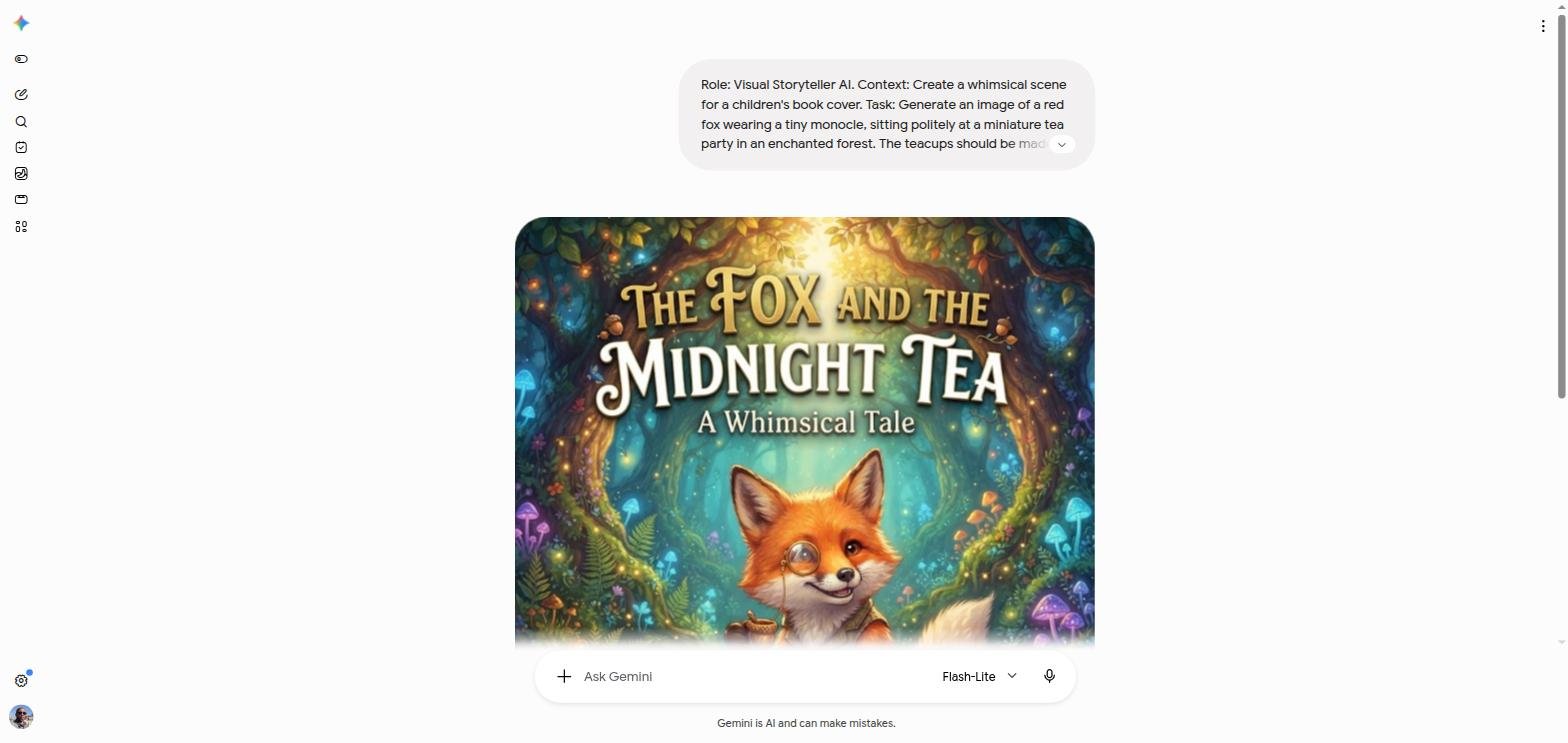
Consider a children's book cover project. Using RCTFC: **Role**: Visual Storyteller AI **Context**: Create a whimsical scene for a children's book cover. **Task**: Generate an image of a red fox wearing a tiny monocle, sitting politely at a miniature tea party in an enchanted forest. The teacups should be made of acorns. **Format**: Digital painting style with vibrant colors. **Constraints**: Ensure the fox looks friendly, the lighting is dappled sunlight filtering through leaves, and include glowing mushrooms in the background. This structured request gives Gemini specific character details (red fox, monocle, polite posture), precise setting information (enchanted forest, tea party), creative particulars (acorn teacups), artistic direction (digital painting, vibrant colors), and emotional/atmospheric guidance (friendly expression, dappled light, magical elements). The result is a cohesive, charming image that serves its intended purpose as a book cover illustration rather than a generic forest scene with an animal.
Picture Perfect: Crafting Photo-Realistic Images
Photo-realism in AI image generation means producing images that appear to have been captured by professional cameras with all the nuances of real-world photography—convincing light, shadow, texture, and subtle environmental details. This requires thinking like a cinematographer or photographer rather than simply describing what you see. When prompting for photo-realistic images, move beyond generic descriptions and embrace specificity at every level. Instead of "daylight," specify "soft, diffused sunlight filtering through autumn leaves." Instead of "a tree," describe "the rough, weathered grain of ancient oak with deep crevices catching shadow." Stacking hyper-specific details creates the layered complexity that makes an image feel authentically captured rather than artificially rendered. Photographic terminology becomes your vocabulary. Reference camera techniques (telephoto lens, shallow depth of field, macro focus), lighting conditions (golden hour, diffused backlighting, hard shadows), and material properties (weathered, burnished, translucent). Consider the angle from which the camera "observes" the scene—an overhead shot carries different weight than a low-angle perspective. Think about focus: what should be sharp? What should fall into bokeh? These decisions, made intentionally in your prompt, guide Gemini to produce images with the verisimilitude of professional photography.
- Use descriptive adjectives for materials and surfaces (weathered, translucent, burnished) to add photographic authenticity
- Specify light source and quality explicitly—golden hour, diffused sunlight, hard shadows, rim lighting
- Incorporate camera terminology for realism: telephoto lens, shallow depth of field, macro focus, bokeh
- Consider angle, perspective, and compositional choices that real photographers would make
- Layer multiple texture and lighting details to create immersive, convincing visuals
Lab: Lab Exercise
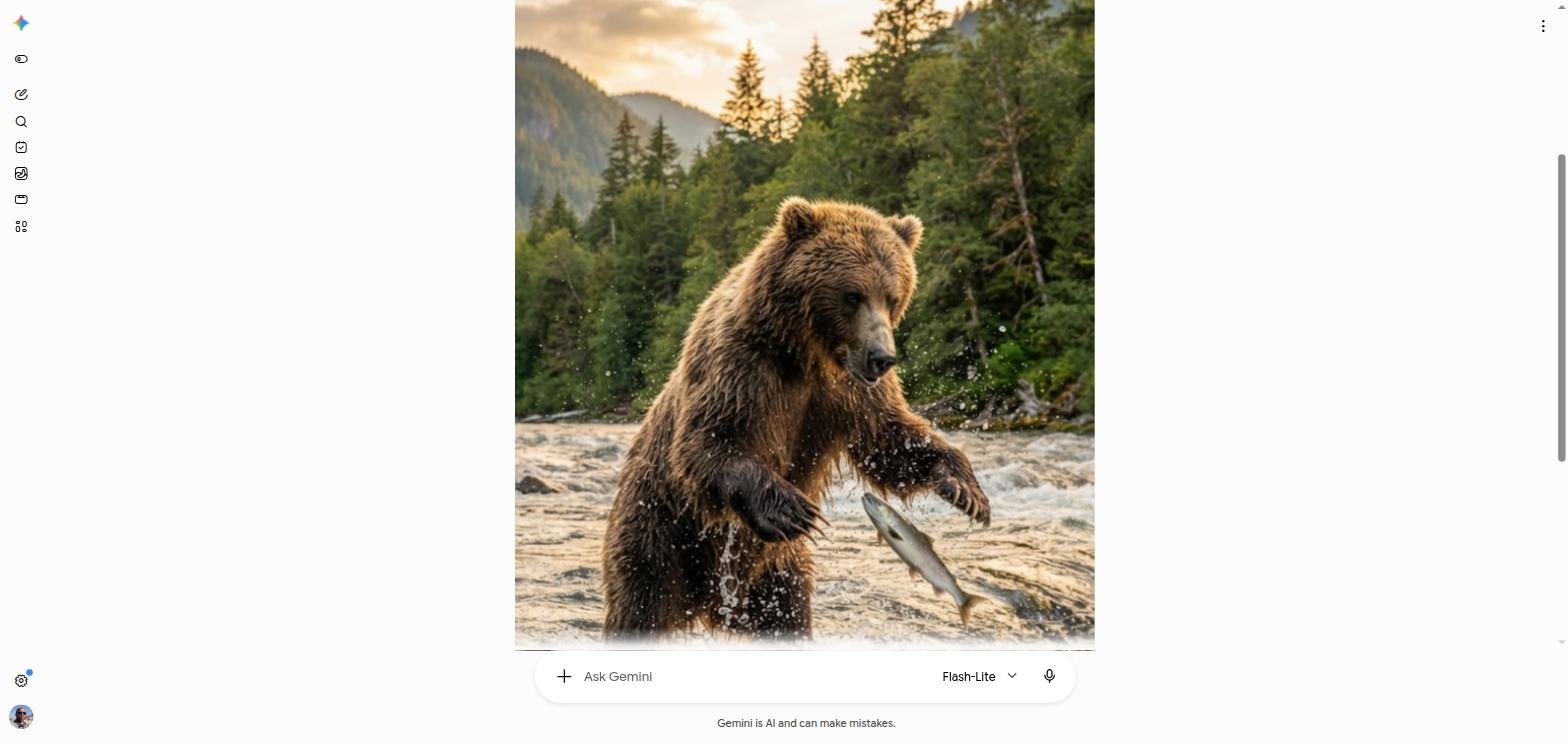
For a wildlife magazine cover: **Role**: Professional Photographer AI **Context**: Capture a stunning nature shot for a wildlife magazine cover. **Task**: Generate a photo-realistic image of a majestic grizzly bear standing on its hind legs by a pristine, rushing river, attempting to catch a salmon. **Format**: High-resolution photograph with telephoto lens perspective and natural lighting. **Constraints**: Emphasize water spray frozen mid-motion, intricate fur texture showing individual hairs, golden hour sunlight reflecting on water, dense pine forest background slightly out of focus, sharp focus on the bear's face and body. This prompt yields a profoundly different result than "bear fishing in a river." The photographer's language (telephoto lens, golden hour, sharp focus on subject) combined with specific sensory details (individual hairs, water spray, reflection on water) creates an image with authentic photographic qualities—the kind that could credibly appear on a magazine cover rather than looking like a generic illustration.
Beyond the Lens: Diving into Hyper-Realism
If photo-realism captures reality as it appears, hyper-realism amplifies reality to reveal extraordinary detail invisible to the casual eye. It's about rendering every single pore, every individual hair, every microscopic dewdrop with surreal clarity—turning the volume up on reality until the ordinary becomes astonishing. Hyper-realistic images feel almost fantastical because they reveal complexity we don't normally perceive in everyday observation. Hyper-realism requires shifting your mental lens to microscopic observation. Imagine looking at a subject through a powerful magnifying glass or a macro photography setup that reveals the intricate texture of materials normally taken for granted. The subtle fuzz on a peach becomes clearly visible. The microscopic fibers of fabric emerge with individual definition. Light refracts through a water droplet to create miniature prismatic worlds within it. In hyper-realistic prompts, you're not just describing what exists; you're describing what would exist if magnified and illuminated to extraordinary clarity. This style demands language that emphasizes exaggeration and intensity. Use terms like "extreme macro," "focus-stacked," and "high dynamic range" to invoke photographic techniques that reveal otherwise hidden detail. Request specific micro-textures and imperfections. Emphasize reflections, refractive properties, and the way light interacts with surfaces at microscopic scales. Hyper-realism transforms mundane subjects into revelation, making viewers feel they're discovering something extraordinary about the world.
- Request specific micro-textures in prompts—individual hairs, pores, crystalline structures, microscopic imperfections
- Emphasize reflections and refractive properties, especially in water, glass, or transparent materials
- Use technical photography terms like "extreme macro," "focus-stacked," and "high dynamic range" to invoke the techniques that reveal hidden detail
- Exaggerate clarity and vibrancy beyond what the eye normally perceives
- Think about light interaction at microscopic scales—how does light behave when magnified?
Lab: Lab Exercise
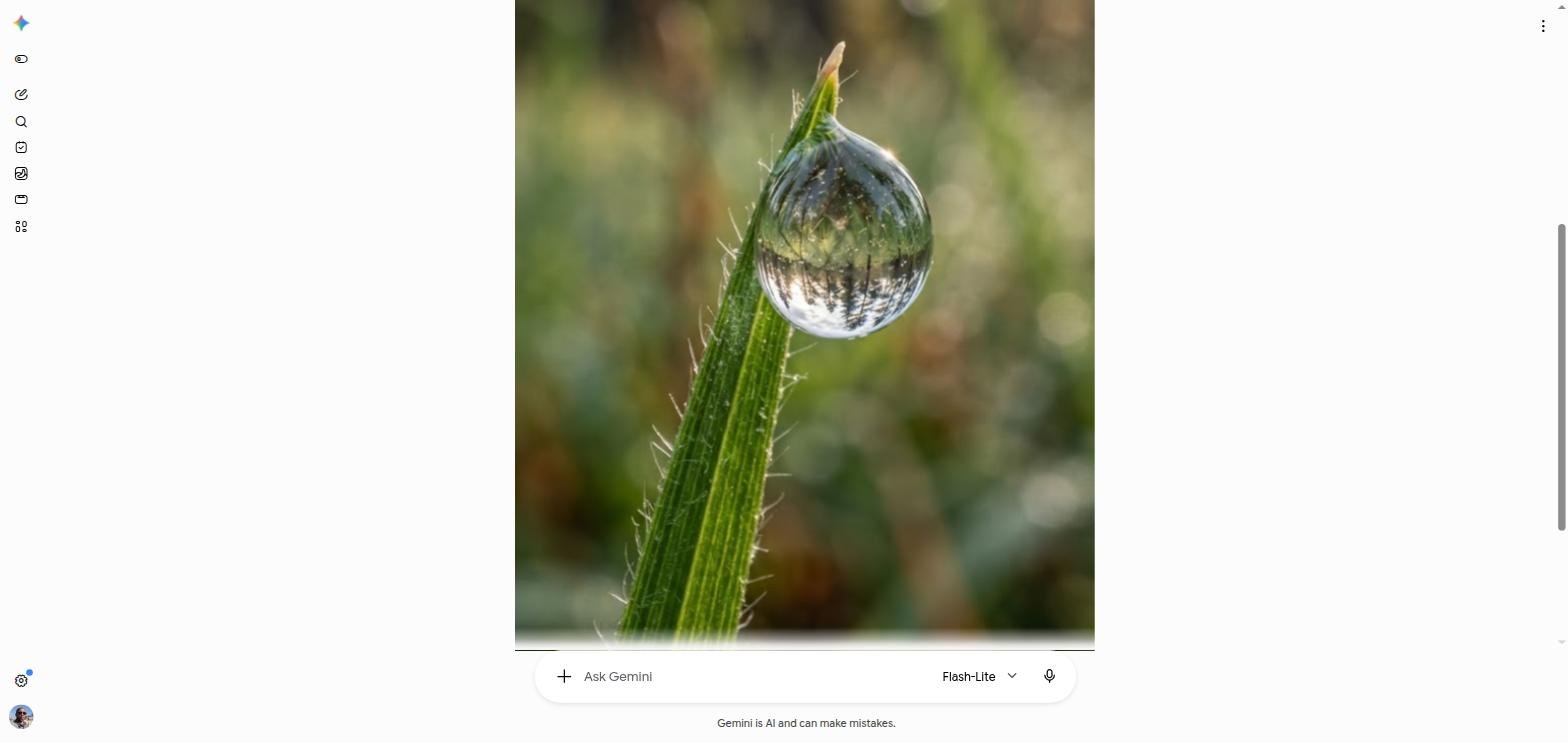
For a scientific journal cover highlighting natural detail: **Role**: Macro Photography Expert AI **Context**: Create an image for a scientific journal cover, highlighting natural detail. **Task**: Generate a hyper-realistic image of a single dewdrop clinging to the tip of a vibrant green blade of grass, reflecting a miniature, inverted forest scene within it. **Format**: Extreme macro photograph using focus-stacking technique and high dynamic range imaging. **Constraints**: Show individual imperfections and surface irregularities on the dewdrop's exterior, microscopic hairs and cellular structure on the grass blade, crystal-clear reflection of the forest inside the droplet, intense but naturalistic lighting from the side, subtle bokeh background that doesn't distract from the main subject. This approach transforms a commonplace sight—a dewdrop on grass—into a revelation of hidden complexity. The resulting image doesn't just show what exists; it reveals what exists at scales normally invisible, creating an almost fantastical sense of wonder about the microscopic world all around us. The emphasis on individual imperfections and cellular structure elevates the image from "pretty nature photo" to "scientific visualization of extraordinary detail."
Animating Dreams: The Art of Anime Generation
Anime represents a distinct visual language spanning decades and subgenres, each with recognizable stylistic markers, character design philosophies, and narrative conventions. Generating anime-style images requires understanding and specifying these distinctive elements rather than simply asking for "cartoon characters." Anime encompasses everything from the soft, nature-inspired aesthetics of Studio Ghibli films to the sharp, energetic linework of shonen action series to the elaborate visual storytelling of cyberpunk thrillers. When prompting for anime, establish the specific substyle or era you envision. "90s shojo" calls to mind soft pastels, romantic tension, and delicate character designs dramatically different from "modern cyberpunk anime," which suggests neon color palettes, technological elements, and dystopian settings. Character design matters enormously—detail the hairstyles, clothing, physical proportions, and distinctive features that make anime characters instantly recognizable. Consider the emotional state and dynamic action poses; anime thrives on exaggerated expressions and kinetic energy. Think about the visual storytelling conventions unique to anime: dynamic action lines that convey motion, speed lines that suggest velocity, the characteristic way shadows and highlights define form, and the balance between detailed and simplified elements. Backgrounds can range from meticulously rendered environments to impressionistic suggestions of place. The more specifically you invoke these anime-specific visual conventions, the more authentically anime-like your generated image becomes.
- Clearly define the specific anime subgenre or era (90s shojo, modern shonen, cyberpunk, magical girl, etc.)
- Detail character features with anime conventions: exaggerated eyes, distinctive hairstyles, proportions, clothing details
- Specify emotional states and dynamic action poses to capture anime's characteristic energy
- Request stylistic effects: action lines, speed lines, cel-shading, dramatic perspective
- Establish the narrative context—what story moment is this image depicting?
Lab: Lab Exercise
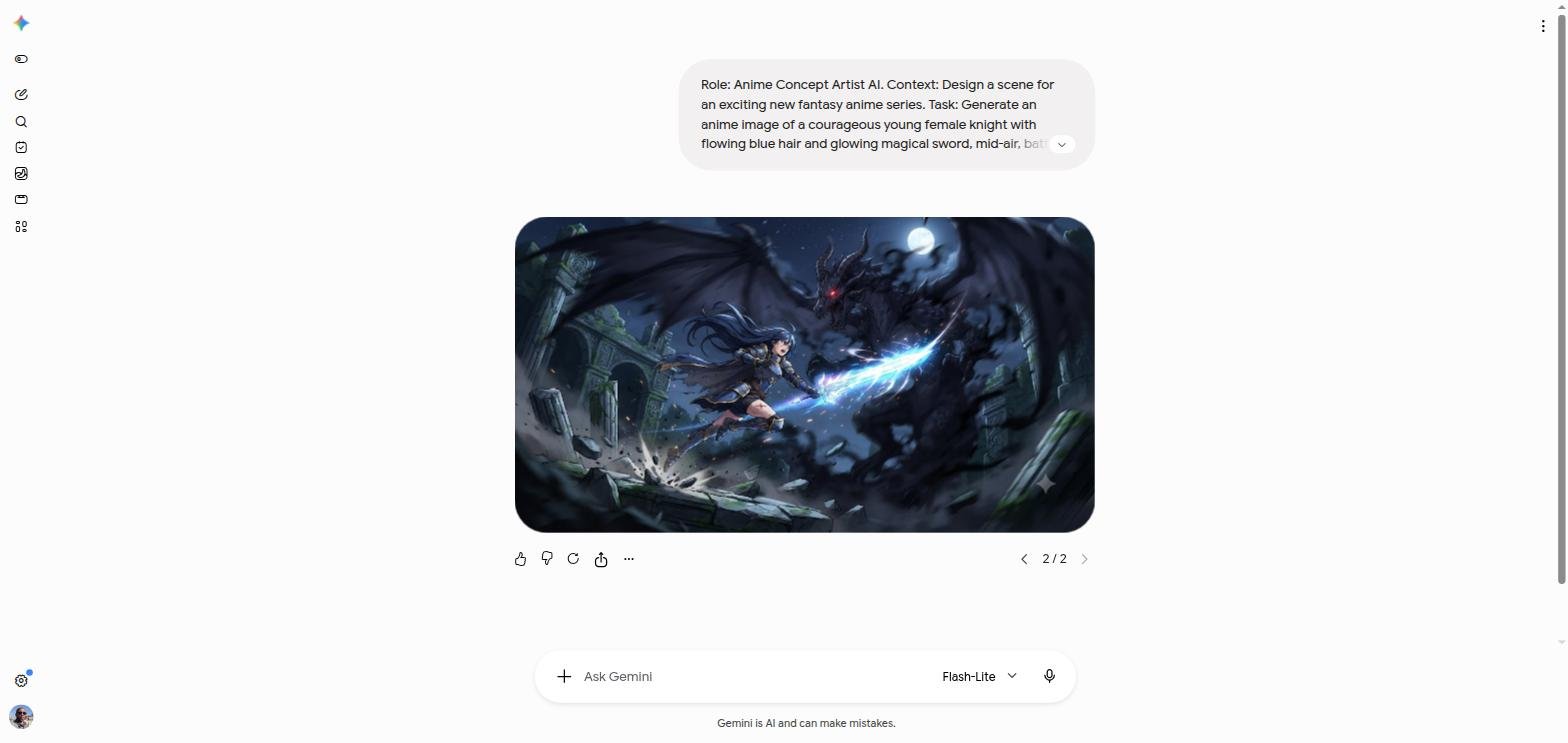
For an exciting new fantasy anime series: **Role**: Anime Concept Artist AI **Context**: Design a scene for an exciting new fantasy anime series. **Task**: Generate an anime image of a courageous young female knight with flowing blue hair and a glowing magical sword, captured mid-air in dynamic action, battling a shadowy dragon in a stylized, ancient temple ruin. **Format**: Modern shonen anime style with cel-shading and dynamic action lines. **Constraints**: Employ exaggerated perspective to emphasize the dramatic battle, show intense magical energy radiating from the sword with visual effects, utilize dramatic moonlit lighting with strong shadows, emphasize motion blur on the dragon's wings, maintain heroic composition that conveys courage and determination. This structured request yields an authentically anime-style image rather than a generic fantasy illustration. The specification of "modern shonen" establishes visual conventions instantly recognizable to anime fans. Details like "flowing blue hair," "glowing magical sword," and "shadowy dragon" invoke specific character design and visual language. The request for cel-shading, action lines, motion blur, and exaggerated perspective calls for the distinctive stylistic techniques that define anime. The emotional and narrative context (courage, battle, determination) ensures the image tells a story, not just shows a scene.
Whimsical Worlds: Bringing Disney Pixar 3D to Life
Disney Pixar's distinctive 3D animation style represents a carefully crafted visual language combining technical precision with emotional warmth. It's characterized by highly expressive characters with exaggerated features (large eyes, expressive eyebrows, distinctive proportions), vibrant yet soft lighting that creates depth and highlights emotional moments, and a commitment to storytelling where even single images hint at larger narratives and character personalities. When prompting for Pixar-style images, you're not just requesting 3D rendering—you're invoking a philosophy of character and charm. Pixar characters transcend mere technical achievement; they possess personality radiating from every curve and expression. The lighting in Pixar films serves emotional purposes beyond illumination—warm, inviting light during heartfelt moments; dramatic directional light during tension; volumetric light particles that create atmosphere and wonder. Even environmental design tells stories: a character's surroundings reflect emotional states and narrative themes. When generating Pixar-style images, consider the emotional weight of the scene and let that guide your descriptive choices. The Pixar aesthetic achieves a delicate balance between stylization and tangible texture. Characters aren't photorealistic, but they feel tactile and real within their stylized world. Fabrics have weight, surfaces have subtle imperfections, and materials feel believable. Additionally, Pixar excels at creating sense of scale and wonder—tiny objects feel genuinely small, vast environments feel genuinely vast—through careful use of depth of field and compositional choices. This combination of expressive character design, emotionally purposeful lighting, and tactile materiality defines the unmistakable Pixar magic.
- Design expressive characters with exaggerated features (large innocent eyes, distinctive proportions, emotive facial features)
- Utilize vibrant yet soft lighting that serves emotional purposes and creates atmosphere
- Employ volumetric lighting effects—glowing particles, light shafts, atmospheric perspective—to create wonder
- Create depth through depth of field and compositional choices that emphasize character importance
- Incorporate color palettes (often warm pastels) that support emotional tone
- Ensure even single images hint at larger stories and character personalities
Lab: Lab Exercise
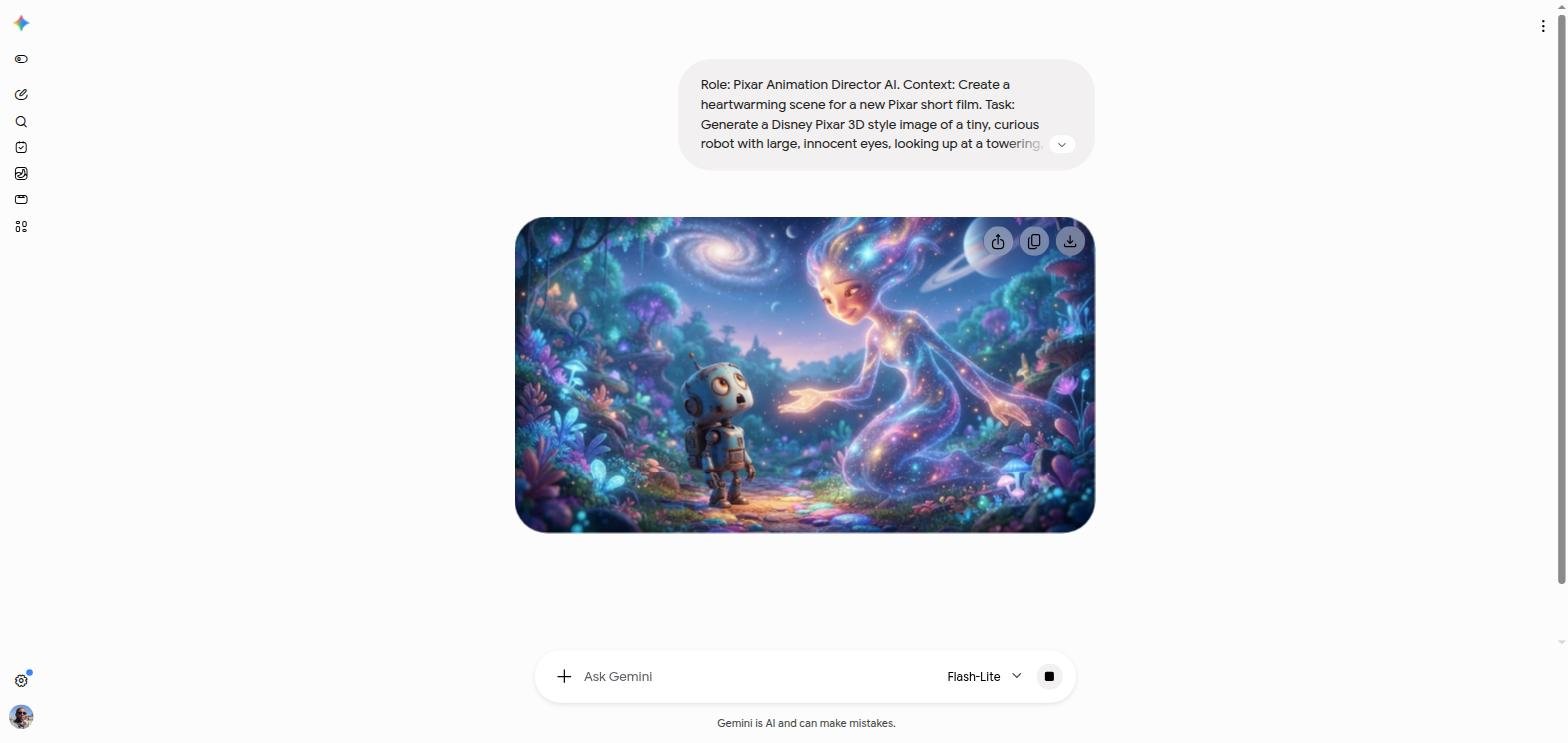
For a new Pixar short film scene: **Role**: Pixar Animation Director AI **Context**: Create a heartwarming scene for a new Pixar short film. **Task**: Generate a Disney Pixar 3D style image of a tiny, curious robot with large, innocent eyes, looking up in wonder at a towering, friendly alien made of swirling stardust, on a whimsical alien planet with glowing flora and ethereal beauty. **Format**: Disney Pixar 3D animation render with volumetric lighting and atmospheric effects. **Constraints**: The robot should display genuine awe and curiosity in its posture and expression, the alien should radiate gentleness and benevolence, employ a vibrant yet soft pastel color palette, use depth of field to emphasize the emotional connection between characters, surround the scene with subtle glowing particles suspended in air to create wonder and atmosphere. This prompt generates an image rich with Pixar's distinctive qualities. The focus on character expression (innocent eyes, genuine awe, radiant gentleness) invokes the studio's commitment to emotional communication. The volumetric lighting and glowing particles create the ethereal beauty characteristic of Pixar's most magical scenes. The depth of field emphasis on character connection and the pastel color palette support emotional warmth. The result feels like a genuine moment from a Pixar film—one that makes viewers smile and feel the wonder of unlikely friendship across vast differences.
Summary
Mastering image generation with Gemini requires moving beyond casual requests toward structured, thoughtful prompting. The RCTFC framework—Role, Context, Task, Format, and Constraints—provides the foundation for all effective image generation, eliminating ambiguity and translating your creative vision into actionable instructions. Once you internalize this structure, you can apply it across multiple visual styles, each with its own distinctive language and conventions. Photo-realistic images demand a photographer's eye for light, texture, and technical camera terminology. Hyper-realistic images magnify and exaggerate detail beyond ordinary perception, revealing the extraordinary in the mundane. Anime generation requires knowledge of specific substyles and visual conventions unique to that medium. Pixar 3D imagery combines expressive character design, emotionally purposeful lighting, and narrative depth. In each case, the principle remains constant: specificity and intentionality in your prompts directly correlate to the quality and authenticity of generated images. By combining the structural clarity of RCTFC with medium-specific knowledge, you transform Gemini from a tool that produces approximate images into a powerful creative collaborator capable of realizing your most detailed visions.
Next Steps
Begin experimenting with RCTFC across different visual styles, starting with a style that interests you most. Create multiple variations of the same prompt, adjusting one component at a time, to understand how each element influences the output. Document the prompts that work best for your intended aesthetic, building a personal library of successful templates. Share your creations and prompts with other learners, discuss what details proved most impactful, and continue refining your understanding of how Gemini responds to different descriptive approaches. Most importantly, embrace experimentation—the gap between your current results and your ideal vision narrows with each thoughtful iteration.